Coral Nails for Summer: Finding the Shade That Suits You
Coral nails for summer: pink, orange or red-leaning? The wrist test finds your shade, plus foil accents, the white pairing and coral toes.

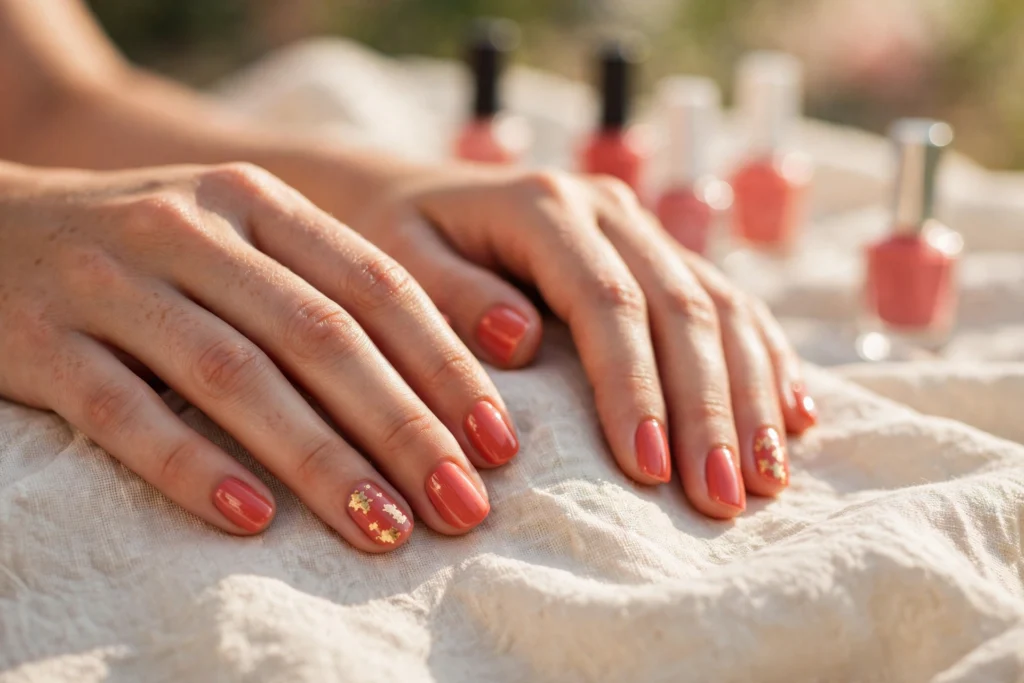
Coral is not a colour, it is a family argument. Somewhere between pink, orange and red lives a whole spectrum of shades, and every summer someone tells me coral does not suit them — when what they mean is that one particular coral, usually the bluest pink one, did not suit them. The right coral exists for absolutely everyone; the skill is in the choosing.
Jump to section
The tutorial below builds a full coral set with a foil accent, and the coral-and-foil combination from MiS MuÑeQuiTaS Nails shows exactly how much life the shade has on longer nails. What follows is my shade-matching method with notes on finishes, toes, and the white-and-coral pairing that never misses.

Reading the coral spectrum
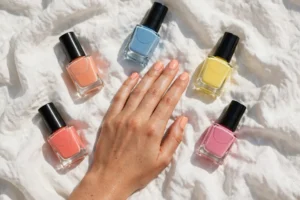
Three families cover the shelf. Pink-corals lean blue: they are the watermelon and flamingo shades, flattering on cooler skin and silver jewellery wearers. Orange-corals lean warm: papaya, tangerine and true living-coral, glorious on golden and olive skin. Red-corals are the deep end — geranium and poppy-coral — and they suit nearly everyone because the red anchors them. The two-minute test: hold the bottle against the inside of your wrist in daylight. The right family makes your skin look clearer and more even; the wrong one makes it look slightly grey or slightly sallow.
What you need
- One coral polish in your family (see the wrist test above)
- A white polish for the classic pairing option
- Optional: gold or rose-gold foil flakes and foil glue for the accent
- Base coat and a glossy, plumping top coat
- A clean-up brush and remover
Application: coral shows everything
Coral cremes are famously streaky in coat one and perfect in coat two, so judge nothing until the second coat is on. Work in three strokes — centre, left, right — and keep coats thin; coral pigments pool at the cuticle and advertise it. Warm-toned corals can stain like yellows do, so base coat is compulsory, and remove patiently rather than scrubbing. If your shade dries a touch flatter than the bottle promised, the plumping top coat restores the juicy, just-painted depth that makes coral look expensive.
One more application truth worth knowing: coral is the shade most affected by your top coat’s character. A standard glossy top coat keeps it true; a plumping, gel-effect top coat deepens it by half a shade and adds the juicy roundness the colour wants; a quick-dry top coat can dull it fractionally, which matters more here than with darker shades. If you own two corals that look identical in the bottle, paint one nail of each and top-coat them both — the finished nails will differ more than the bottles did, and that comparison is the honest way to choose. Finish decisions like these are unglamorous and entirely decisive, which is most of what thirty years of nail counters teaches you.
The foil accent and other finishes
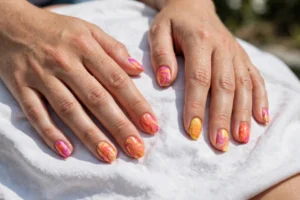
Coral and gold foil are natural partners: press foil flakes onto the tacky top-coat layer of one or two nails, concentrating them toward the cuticle or the tip rather than evenly, and seal twice. The effect is sunset-on-water and it elevates a plain colour set into an occasion set in four minutes. Matte top coat over coral is the fashion-editor option — it turns the shade into something architectural — while a fine gold glitter gradient at the tips is the holiday version. For gradient technique generally, ombre nails with a sponge walks through the sponge method that coral-to-peach gradients rely on.
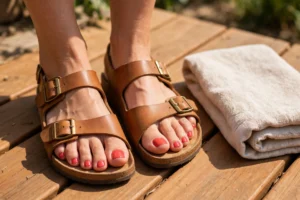
Coral and white, coral on toes
The pairing that never misses is coral with white: alternate nails, a white accent with a coral dot, or coral tips on white. It is crisp, tan-enhancing, and reads as summer without a single motif. On toes, coral is the pedicure shade I recommend most — it flatters every sandal and every skin tone, hides regrowth better than red, and survives beach weeks gracefully. The full seasonal context for the shade sits in trendy summer nails, where coral anchors half the palettes, and if you want pattern over your coral, marble nails for beginners shows a white-and-gold marble that layers beautifully over a coral base.
Coral at every length and shape
Coral is unusually democratic about nail shape. On short, squared nails it reads as a block of pure colour — modern, a little sporty, and the easiest version to maintain through a busy fortnight. On almond nails the same shade turns softer and more elegant, because the colour pools along a curve instead of ending at a corner. Coffin and stiletto lengths push coral toward its party end, especially with the foil accent, and they are the shapes that show the shade’s orange-red depth best under evening light. If you are between shapes, squoval in coral is the one nobody ever regrets: contemporary without trying, and kind to nails that break at corners.
And if you take one coral away from this whole guide, take it in two finishes — glossy for the week, foil-accented for the weekend — because no other shade in the summer drawer changes its personality so completely with so little extra work.
Frequently asked questions
Is coral a pink or an orange?
Both, deliberately — coral is the name for the whole pink-orange-red borderland. When shopping, ignore the word and judge the bottle against your wrist: pink-leaning, orange-leaning and red-leaning corals behave like three different colours.
Does coral make hands look tanned?
It is the most tan-flattering family in the drawer, because the warm contrast makes skin read golden by comparison. Orange-corals do this most strongly; pink-corals brighten fair skin without any tan at all.
Why does my coral look different on the nail than in the bottle?
Corals deepen as they dry and deepen again under top coat — usually by about half a shade. If you are between two bottles, buy the lighter one. Warm bathroom lighting also pushes coral orange; check the finished set in daylight before judging.