
Crochet Draught Excluder: Block the Gap Under the Door
A firm crochet tube, stuffed heavy and striped from leftovers, that ends the sigh under the front door: one evening, one ball of chunky yarn.

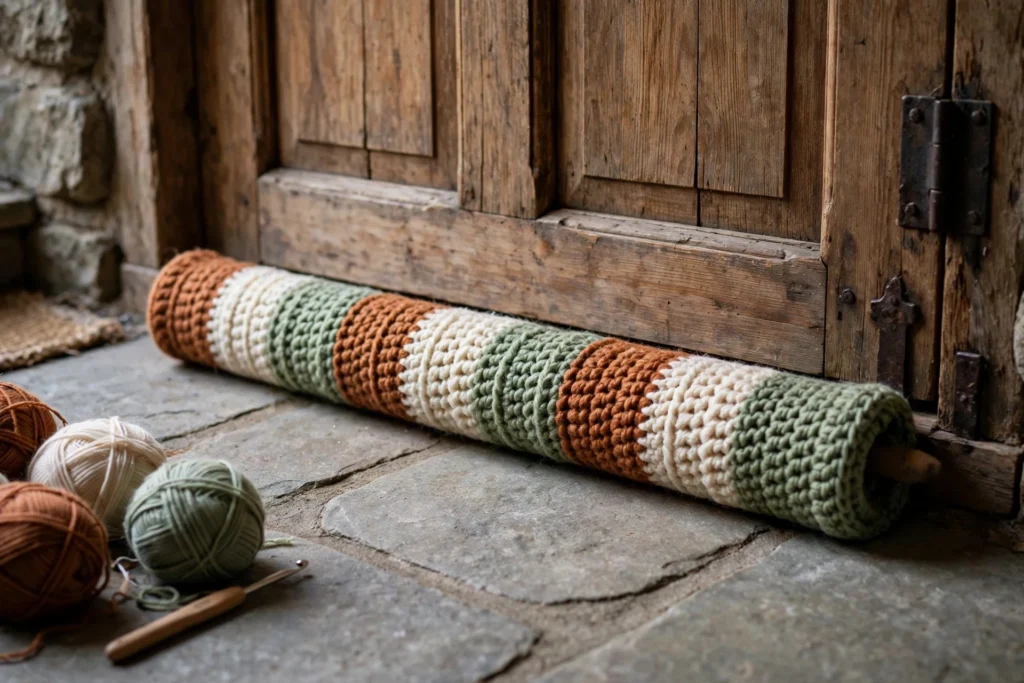
There is a gap under our front door that you could post a letter through, and every winter it breathes cold air across the hall floor like the house is sighing. The fix costs one ball of chunky yarn and an evening: a crochet draught excluder, worked as a simple tube, stuffed firmly, and laid along the door to block the gap for good.
Jump to section
The version I follow is Fifty Shades of Yarn’s easy draft blocker, which keeps the construction as plain as it should be — a tube in the round, worked until it matches the door, with the whole craft lying in the stuffing. What follows is that method with my notes on measuring honestly, stuffing firmly enough, and finishing the ends so it looks made rather than improvised.

What you need
You need chunky yarn — this is the perfect project for the odd balls left from Christmas makes, since stripes are a virtue here — a hook to match, a stitch marker, and stuffing. For stuffing, proper toy filling works, but the traditional choice is better: an old cushion’s innards, worn-out tights, or fabric scraps cut small, which add the weight that keeps the excluder sitting where you put it. It belongs to the same winter-defence family as our crochet hot water bottle cover — one guards the bed, this one guards the door.
Measure the door, not the pattern
Patterns quote lengths; doors ignore them. Measure the inside width of your door frame and aim for an excluder five centimetres longer, so it tucks slightly into the corners where draughts sneak hardest. Note the gap’s height too: a tube of about ten centimetres across suits most doors, but a Victorian gap may want twelve. Write both numbers down, because the tube is worked to length, not to a round count, and January-you will not remember what December-you measured.
Step by step
One: start with a magic ring of six single crochets and increase evenly over the next few rounds until the circle is your chosen width — about thirty stitches for a ten-centimetre tube in chunky yarn. Two: settle into plain spiral rounds, one stitch in every stitch, and stay there; this is television crochet of the highest order. Three: at the halfway point, start stuffing, and keep stuffing every ten centimetres or so from then on — packing the far end firmly is impossible if you leave it all to the finish. Four: when the tube is a fraction short of your measured length, stuff the last section extra firmly. Five: decrease over the final rounds to close the tube, pull the last tail through, and weave it in deeply. Six: lay it against the door and enjoy the silence where the sighing used to be. The striped version in the photograph uses three leftover colours in honest bands, which is the correct attitude to a project that lives on the floor.
Stuffing is the whole craft
A draught excluder fails by being soft. It must sit heavy and close against the door’s bottom edge, with no dips along its length for air to sneak through. Pack the stuffing in small handfuls, push each one down with the end of a wooden spoon, and aim for a tube that feels like a firm bolster, not a plush toy. Adding a long inner sock of dried rice or lentils inside the stuffing gives serious weight for doors in exposed positions — the old-fashioned trick, still the best one. If winter-proofing is your season’s theme, our crochet cowl tutorial applies the same philosophy to the gap between coat and chin.
Stripes, ends and upkeep
Change colour whenever a ball runs out and call it a design decision; nobody in history has measured a draught excluder’s stripes. For a smarter finish, work the last round at each end in slip stitch for a defined edge. Shake and vacuum it weekly alongside the hall rug, spot-wash as needed, and re-plump it each autumn by working extra stuffing in through the end seam. Ours is on its third winter and still sits like it was poured there, beneath a door that also keeps in the warmth of the easy chunky crochet blanket waiting on the sofa.
Windows, back doors and other gaps
The front door is rarely the only offender. A half-length excluder suits the bottom of a draughty window, worked to the sill’s width and stuffed a little softer so it moulds to the frame. The back door usually wants the full treatment plus the rice core, since it faces the weather. And the hatch to an uninsulated attic is the secret worst gap in many houses — an excluder along its edge will not win design awards, but it will take a degree off the landing’s chill. Worked in the same stripes from the same leftover balls, a set of three makes the whole house feel deliberately defended rather than patched.
Frequently asked questions
How much yarn does a draught excluder take?
About 150 to 250 grams of chunky yarn for a standard door, depending on width — typically two balls, or the leftovers from one larger project. It is one of the most economical makes in this batch.
What is the best stuffing?
Firmness and weight matter more than material. Toy stuffing mixed with fabric scraps works well; a inner core of dried rice or lentils in a fabric sock adds the heft that keeps it seated against draughty doors.
Can I make it washable?
Yes — crochet the tube, but close one end with a drawstring or buttons instead of sewing it shut, and keep the stuffing in a separate inner tube of old fabric. Then the cover washes alone whenever the hall floor wins.




