
How to Crochet a Dishcloth: The Beginner Cotton Classic
The crochet dishcloth is the perfect first project: one ball of cotton, one textured stitch, and a cloth that works hard for years.

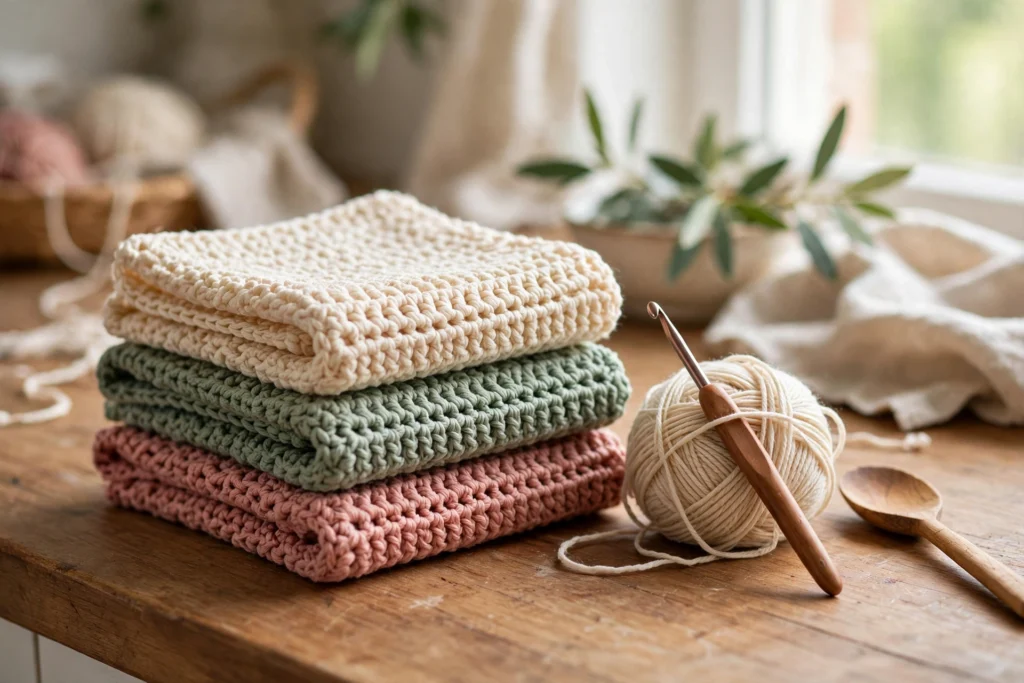
Every crocheter should make a dishcloth, ideally early and often. It is a small cotton square that teaches you even tension, straight edges and a useful stitch, and at the end you own something that goes straight into daily service. Mine earn their keep in the kitchen for years, and a stack of them tied with ribbon is still the housewarming gift I reach for.
Jump to section
The dishcloth is also the most honest project in crochet. Gauge does not matter, nobody will measure it, and the only real rule is the yarn: it must be cotton. Everything else is preference. If you enjoyed the scrap-yarn spirit of my crochet doily coaster from scrap yarn, think of the dishcloth as its bigger, hardworking sibling.
The tutorial below is from Melanie Ham, whose beginner cotton washcloth tutorial covers the classic textured square in calm, follow-along detail. Her video is below. I have added my own notes on cotton choices, the stitches that actually scrub, and how to keep a working cloth fresh instead of faintly tragic.

Why cotton is non-negotiable
Acrylic yarn melts near heat, repels water instead of absorbing it, and goes limp and sad in a hot wash. Cotton absorbs, scrubs, survives boiling washes and gets softer with use. Look for unmercerised kitchen cotton for maximum absorbency; the shiny mercerised kind is prettier but slicker and less thirsty. One standard ball makes one generous cloth, and the leftovers from two balls make a third striped one, which is how colour schemes happen by accident in my kitchen drawer.
What you need
- One ball of worsted-weight cotton yarn, around 80 to 100 metres
- A 5 mm hook, or the size your yarn suggests
- Scissors and a yarn needle for weaving in ends
- Optional: a second colour for a border or stripes
Choosing a stitch that scrubs
A good dishcloth stitch has texture. Single crochet gives a firm, dense cloth that takes longer to work. Half double crochet is the happy middle: quick, sturdy and nubby enough to shift dried-on porridge. The textured stitch in the video adds small ridges that genuinely help with scrubbing, and it is built from stitches a beginner already knows. Avoid lacy patterns for working cloths; save the openwork for the how to crochet a granny square projects, where holes are a feature rather than a crumb escape route.
Working through the make
Chain to your chosen width, around 30 to 35 stitches for a cloth of roughly 20 to 25 centimetres, and work in rows, turning at the end of each. Count your stitches for the first few rows until the count feels automatic; dishcloth edges wander when the last stitch of the row gets missed, and a stitch marker in the first and last stitch saves unpicking. Keep going until the piece is square, which you check by folding it corner to corner. If you are adding stripes, change colour at the end of a row and carry the ends up the side to weave in later, or embrace the ends as a short fringe if the cloth is for your own sink.
Edging and finishing
A single round of single crochet around all four sides, with three stitches in each corner, tidies everything and stops the edges stretching out of shape in the wash. Weave in ends properly, back and forth in three directions, because a dishcloth lives a rough life and lazy ends unravel by week two. Then wash it before first use: cotton blooms and softens after its first hot wash, and the cloth will work better for it.
Care: keeping cloths fresh
Rinse and wring the cloth after use and hang it where air can reach it, not in a damp ball by the tap. Machine wash hot with towels every few days, and rotate two or three cloths so none of them lives permanently damp. Retire a cloth to floor duty when it thins, and crochet its replacement in an evening. Cotton cloths also make excellent packing padding for mugs and glasses when you move house, which is the most dishcloth sentence ever written and also true. It is the circle of kitchen life, and it pairs well with the beginner projects in my easy crochet scarf for beginners guide once your tension is feeling confident.
Stripes and borders: making it yours
A working cloth does not have to look like work. Two rows of a contrast colour near one end gives you the classic French tea-towel look for free, since you are changing yarn anyway. School and sports colours make cloths people actually claim as their own at a shared sink. A border in a second colour is also practical camouflage: it frames slight wobbles in your edges while you are still learning, and it uses up the last metres of a ball that would otherwise roll around the drawer. If you give cloths as gifts, a set of three in graded shades, tied with the yarn tail’s bigger sibling, ribbon, looks like a shop set and costs one relaxed evening.
Frequently asked questions
What size should a crochet dishcloth be?
Around 20 to 25 centimetres square suits most hands and sinks. Bigger cloths are handy for drying dishes; smaller ones make good face cloths in softer cotton. Square matters more than exact size.
Can I use leftover acrylic yarn instead?
For a dusting or dry-wiping cloth, yes. For anything involving water, heat or scrubbing, acrylic disappoints quickly. Cotton is inexpensive and a single ball is a complete project, so it is worth using the right fibre.
How many dishcloths can I get from one ball of cotton?
Usually one generous cloth from a standard 100 g ball of worsted cotton, with enough left over for a border in a second colour or a small matching scrubbie. Thinner cotton goes further but makes a lighter cloth.




