
15 One-Skein Crochet Projects for This Weekend
One beautiful skein, fifteen projects: wearables, home makes and small gifts, each sized to fit a single ball of yarn.

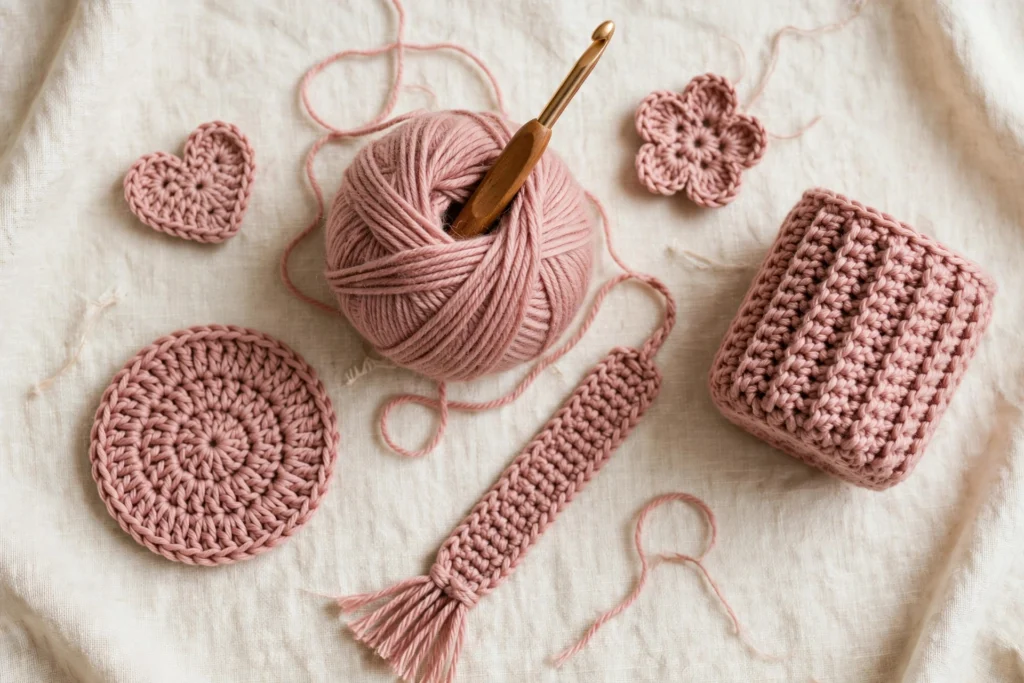
Every crocheter has The Drawer: single skeins bought because the colour was beautiful, with no plan attached. This list is the plan. Fifteen one-skein crochet projects, each sized to fit inside a single standard ball of yarn, sorted into things to wear, things for the home, and small joys that become gifts. Pick the skein first, then the project that suits its weight and fibre.
Jump to section
The video below is from TL Yarn Crafts, whose one-skein project round-up is the most honest I have found about yardage, which matters more than inspiration here. A project that runs out of yarn at 90 percent done is a heartbreak genre of its own. Where a project on this list has a full tutorial on this site, I have linked it, and the yardage notes assume a typical 100 g ball of DK or worsted unless I say otherwise.

Wear it
1. Twisted ear warmer
A ribbed band with a front twist, warm over the ears and kind to hairstyles. My crochet ear warmer headband tutorial uses one skein of worsted with room to spare.
2. Fingerless gloves
The most-used thing I own from November to March. A full walkthrough lives in my crochet fingerless gloves tutorial; one skein of DK makes the pair.
3. Easy beanie
A top-down or ribbed beanie fits in one skein of worsted for most adult sizes. Start with the simple pattern in my easy crochet beanie for beginners guide and add a pompom from the last metres.
4. Chunky cowl
One skein of chunky yarn, worked in the round in a textured stitch until it is gone, gives a single-loop cowl that sits close and warm. Stop when the skein does; cowls forgive any height.
5. Evening slippers
Chunky yarn makes a pair of house slippers from around one and a half skeins, but a single skein covers smaller sizes and children’s pairs easily. The beginner slippers tutorial in this batch is the pattern to use.
For the home
6. Doily coaster set
Four to six coasters from one skein of cotton, depending on size. My crochet doily coaster from scrap yarn is exactly this maths, and cotton oddments count as a skein for our purposes.
7. Mug cozy
Thirty minutes, one button, and your tea stays warm. The crochet mug cozy tutorial is written for a single small ball, which makes it the perfect first one-skein project.
8. Cotton dishcloth
One ball of kitchen cotton, one textured square, years of service. The dishcloth tutorial in this batch covers stitch choices and care, and it is the project I give new crocheters first.
9. Pillow front
One skein of chunky makes a single cushion front in a bold stitch; sew or crochet it to a fabric back. The ideas in my crochet pillow ideas round-up scale down to one-skein fronts happily.
10. Hanging plant-pot cozy
A simple cylinder with three chain straps turns a plain plant pot into a hanging feature. Cotton or jute-blend skeins work best, and it hides the ugly nursery pot completely.
Small joys and gifts
11. Easy heart
Fifteen minutes and a few grams of yarn. The easy crochet heart makes keyrings, card toppers and garlands, and it is the friendliest first shaped project there is.
12. Simple flower
One skein becomes a whole bouquet. Follow my how to crochet a flower tutorial and vary the petal counts for a mixed bunch that never needs watering.
13. Daisy bookmark
A flat daisy on a chain-stitch stem, small enough to post inside a book as a gift. My crochet daisy bookmark uses a few grams, so one skein is a library of them.
14. Snowflake ornaments
Stiffened white cotton snowflakes, each one different, each one quick. My crochet snowflake ornaments tutorial is the seasonal one-skein classic in this house.
15. Mini stockings and tree ornaments
The Christmas ornaments in this batch, the little tiered tree and the mini stocking, each use a fraction of a skein. A single ball of green and a single ball of red, plus scraps, decorate half a tree between them.
One more honest note before the choosing: a skein is not a standard unit. Balls range from 50 g to 200 g, and metre counts vary even more, so treat the projects below as sized for a typical 100 g ball and scale your ambitions to the label in your hand. The small projects at the end of the list will absorb almost any skein you own, including the odd half-ball left from a bigger make, and that is exactly where they earn their place.
How to choose which skein
Match fibre to job. Cotton belongs in the kitchen and bathroom projects, wool and warm blends in the wearables, and anything scratchy or precious in the ornaments and gifts where skin contact is brief. Check yardage rather than weight: a 100 g ball of DK holds roughly twice the metres of a 100 g ball of chunky, and projects care about metres. If your skein is a beautiful hand-dyed single, give it a project where the colour is the whole point, like the cowl or the ear warmer, rather than one where it hides under a mug.
Reading a ball band like a planner
Before you commit a skein, read its label the way you would read a recipe. The metre count tells you what is possible, the fibre tells you what is sensible, and the recommended hook size hints at how dense the fabric wants to be. Then do the unglamorous maths: the project descriptions on this list assume typical balls, so if your skein is a petite 50 g hand-dyed treasure, aim it at the small joys section, or pair it with a plain partner skein and use the special one for the visible parts, the cuff, the flower, the front of the cozy. There is no failure quite like running out of an irreplaceable dye lot at the toe of a slipper, and there is no triumph quite like finishing a project with one metre to spare and a plan already formed for it.
Making one skein go further
Weigh the skein before you start and again at the halfway point of the project; if more than half is gone, you are not halfway. Choose stitches with a modest appetite, since tall lacy stitches eat yarn, and keep a contrast colour on standby for edges, cuffs and pom-poms, which stretches a main skein gracefully. And when a project truly will not fit, shrink the project, not your standards: a smaller coaster set is a finished thing, while an almost-beanie is a drawer resident. Keep a small notebook page, or a note on your phone, listing each finished project’s yarn and how much was left over. Three entries in, you will know your own tension’s appetite better than any ball band can tell you, and your one-skein choices will get braver in exactly the right way.
Frequently asked questions
How much yarn is in a typical skein?
It varies by weight: roughly 200 to 250 metres for 100 g of DK, 150 to 180 for worsted, and 80 to 120 for chunky. Always read the ball band, and treat yardage, not grams, as the number that decides what a skein can become.
What if I run out of yarn near the end?
Finish the piece in a coordinating contrast for the last rows or the edging, and make it look deliberate by repeating that contrast somewhere else, like the hanging loop or a button. Planned two-tone beats panic-bought almost-matching every time.
Which one-skein project is best for a total beginner?
The mug cozy or the dishcloth. Both are flat, quick, useful, and teach even tension without any shaping. Move to the ear warmer next and you will have the stitches for almost everything else on this list.




