
Crochet Face Pads: Reusable Cotton Rounds in an Evening
Soft cotton rounds crocheted in ten minutes each, smooth on one side and scrubby on the other: reusable face pads that empty the cotton jar.

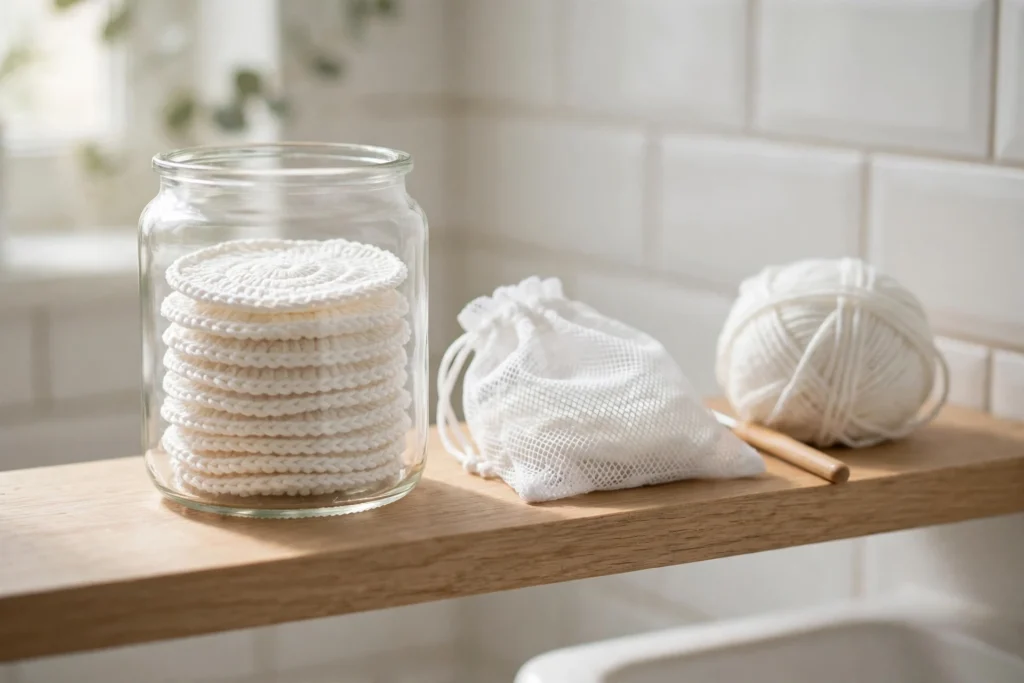
My bathroom shelf has a glass jar on it that makes me feel unreasonably organised: a stack of soft white crochet face pads, washed and rewashed, standing in for the disposable cotton rounds I used to buy by the hundred. Late winter is when I make a fresh set — a spring-clean of the smallest kind — and each pad takes about ten minutes of the easiest crochet there is.
Jump to section
The version I follow is Clever Stitch Crochet’s crochet-along for beginner face scrubbies, worked slowly enough to stitch beside. What follows is that simple round construction with my notes on cotton choice, texture — because smooth and scrubby are different tools — and the wash-bag system that makes reusables actually get reused.

What you need
One ball of smooth, unmercerised cotton yarn — DK or worsted — a hook one size smaller than the ball band suggests so the pad holds its shape, scissors and a yarn needle. That is the entire list, and one ball makes a generous set. If your round-work needs a refresher first, our how to crochet a magic ring guide teaches the centre start every pad begins with, and it is the only technique in the project that is not plain stitches in a circle.
Choosing cotton: the whole decision
Not all cotton behaves alike on a face. Unmercerised cotton is matte, absorbent and soft, and it is the right yarn here. Mercerised cotton is shiny and slippery — beautiful for doilies, wrong for removing cleanser, because it skates over skin instead of gripping gently. Avoid anything with acrylic blended in for the pads you will use daily; blends dry faster but absorb less and age into scratchiness. White shows you the makeup coming off, which is satisfying and hygienic-looking; colours hide stains and last longer between confidence crises. I make white for the jar and colours for the travel bag, and both are correct.
The basic pad, round by round
Start with a magic ring. Round one: twelve double crochet into the ring, join. Round two: two doubles into every stitch, twenty-four. Round three: alternate one double and two doubles around, thirty-six — and for most faces, stop there: the pad should sit inside your palm at roughly eight centimetres across, big enough to work with, small enough to launder without hogging the wash. Finish with a round of single crochet to firm the edge if your pads will see heavy use, fasten off, and weave the tail in a zigzag so it survives the machine. That is the whole pattern. Everything else is texture and preference.
Smooth side, scrubby side
One pad with two personalities is the professional setup. Keep one face of your set glass-smooth — plain doubles throughout — for eye makeup and toner, where friction is the enemy. Give the second set texture: a round of puff stitches or alternating front-post stitches builds a gentle nubbliness that lifts everyday makeup and sunscreen without a separate exfoliator. The scrap-yarn relative of this texture play is our crochet doily coaster from scrap yarn — same cotton, same small-circle discipline, different room of the house.
The wash system that makes it stick
Reusables fail on logistics, not virtue, so build the system while the making mood lasts. Crochet or sew one small mesh bag. Used pads go straight into the bag, the bag goes into the weekly wash at forty degrees with the towels, pads come out and air-dry flat in a stack. Make at least fourteen pads — a week’s worth of two-a-day plus laundry slack — or you will run out on a Thursday and relapse. The same one-evening, cotton-and-rounds logic powers our how to crochet a dishcloth tutorial, if the kitchen shelf is next on your spring list.
Making them as gifts
A stack of seven pads, tied with ribbon, plus the little wash bag, is one of the best small gifts I give — useful, pretty, and visibly handmade without being a garment anyone must pretend to wear. Tuck a note in saying they are cotton, machine-washable, and replace the disposable kind; recipients genuinely write back about the jar on their shelf. Work gift sets in the recipient’s bathroom colours if you know them, and keep one texture of each kind in the stack so the set teaches its own system.
One ball, a whole bathroom
The arithmetic is the joy here: a single fifty-gram ball of DK cotton yields roughly a dozen pads, which is a full working set plus spares, for less than a tube of the cleanser they will serve. Keep the set’s rhythm by working production-line style — all the first rounds, then all the second rounds — while a podcast runs; the pads queue up like coins. If your cotton stash holds three colours, make three mini-sets and rotate them by colour through the week: Monday’s colour in the jar, the rest in the wash bag, and the laundry maths becomes visible at a glance. Small systems, honestly kept, are the entire secret of the reusable life, and this is the smallest system I own that has never once broken down.
Frequently asked questions
How do I wash crochet face pads?
In their mesh bag, at forty degrees with towels or bedding. Air-dry flat. Cotton pads soften with washing and easily last a year of regular use before the edges tire.
What size should a face pad be?
About eight centimetres across — palm-sized. Three rounds of double crochet in DK cotton lands there for most hands; add or drop a round to suit your own palm.
Are they gentle enough for eye makeup?
The smooth version is, yes — plain double crochet in unmercerised cotton, used wet with your usual remover. Keep the textured set for the rest of the face and never scrub at eyes.




