
16 Spring Garden Crochet Projects to Make in March
Sixteen spring garden crochet projects sorted by job: the Easter table, small animals, stems that never wilt, and makes for the garden itself.

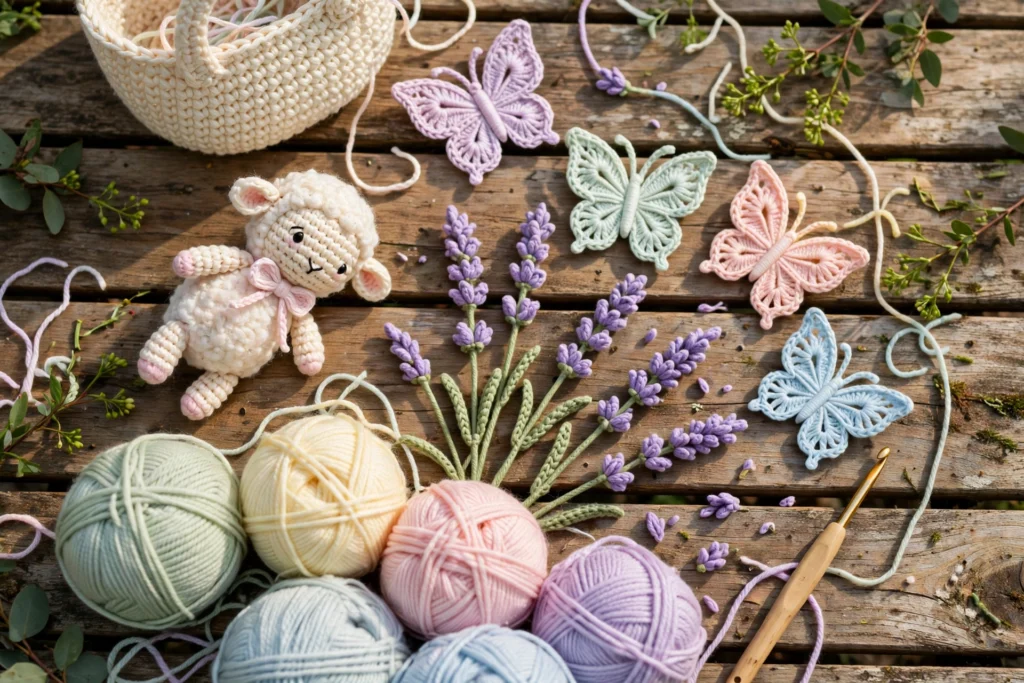
March crochet moves outdoors — not to work in the garden, exactly, but to make for it: the table by the window, the first lunch outside, the basket by the door. This is the spring garden edit, sixteen projects organised by the job they do, from the Easter table to the windowsill, sized in evenings and honest about which ones want a weekend.
Jump to section
The inspiration reel for the edit is Curious Papaya’s fifty spring patterns round-up, a generous reminder of how wide the season runs. Work through the sixteen by job. This batch’s own tutorials — the Easter basket, the lamb, the butterflies and the lavender sprigs — carry four of them in full step-by-step form; the rest are built from projects already on the site. Nothing here needs anything exotic delivered: the whole edit runs on cotton, scraps, one hook per size and the contents of a normal craft drawer, which is rather the point of a garden season that starts indoors.

For the Easter table (1–4)
1. The crochet Easter basket — this batch’s sturdy handled centrepiece, filled before it is finished in your head. 2. A nest of eggs to fill it — our how to crochet Easter eggs pattern in every pastel the scrap bag owns. 3. Egg cosies in bunny colours — small enough to make at breakfast for lunch, and the fastest route from bare egg to dressed table. 4. A garland of this batch’s butterflies along the table’s edge — ten minutes each, an envelope to store, a whole season’s return on one evening. The table is where the season is performed for other people, so it gets the first makes and the best yarn; everything on it is washable, which the chocolate will test before the weekend is out.
The small animals (5–8)
5. The crochet lamb — this batch’s pocket-sized amigurumi, the calm centre of the spring shelf. 6. The pocket bunny — our crochet bunny amigurumi, still the fastest animal in the house and the lamb’s natural neighbour. 7. A chick revisited — last spring’s surprise-egg chick, remade in this year’s colours to sit in the new basket. 8. A flight of butterflies as shelf company — the same ten-minute make from the table garland, pinned along the shelf edge where the animals live. The small animals are the shelf’s population and the basket’s passengers; they are also, not coincidentally, the makes that get picked up and held, so stitch them tight and embroider the faces.
Stems that never wilt (9–12)
9. Lavender sprigs — this batch’s tall purple columns, nine to a jam jar. 10. Tulips in this year’s colours — the wired stems of our crochet tulip tutorial, reworked in butter yellow and blush. 11. The last daffodils — our crochet daffodil tutorial before the real ones finish, trumpets forward in the vase. 12. Snowdrops’ farewell posy — our crochet snowdrops gathered one last time before they hand the windowsill to the taller stems. The vase is the garden you control completely — no slugs, no late frost — and it is arranged by height like any florist’s bunch: the faces forward, the tall stems standing behind.
For the garden itself (13–16)
13. A plant hanger for the first repotting — our crochet plant hanger, lifting the seedlings into March’s returning light. 14. Butterfly markers for the seed trays — the ten-minute butterfly on a florist’s wire, naming nothing but cheering everything. 15. A cotton cloth for the garden table — the dishcloth stitch at table-runner ambition, worked in stripes of every green in the bag. 16. A scrap-yarn mat for the back door — the rag-rug law applied to cotton leftovers, where the spring mud will meet it first. These last four are the working makes, the ones that leave the house; work them in the toughest cotton you own and let them earn their keep in real weather.
Working the edit
The sixteen fall into three honest sizes. The ten-minute makes — butterflies, cosies, markers — are the evening fillers, worked in batches while other projects dry or block. The evening makes — the basket, the lamb, a jar of lavender — are one sitting each with the radio on. The weekend makes are only the cloth and the mat, and both are repetition rather than difficulty. Sequenced that way, the whole edit is a fortnight of ordinary evenings, and it leaves the garden table dressed before the first lunch outside is even weather. If March turns wet and stays wet, the same sixteen simply migrate indoors and dress the windowsills instead — a spring garden is a direction, not a postcode. Start with the basket, because four of the sixteen are its contents or its company, and a basket on the table organises the making of everything that goes in it. Photograph the table when it is done; the spring garden you can keep is the one you can look at again in November.
Sequencing the fortnight
Order matters more than speed. Week one belongs to the basket and its contents — basket first, then eggs, cosies and the lamb — because a finished centrepiece on the table makes the rest of the list feel inevitable rather than aspirational. The butterflies and markers run in parallel all fortnight, ten minutes at a time, in the gaps other projects leave. Week two is stems and greens: lavender, tulips, daffodils and the snowdrop farewell, arranged as each stem finishes rather than in one ceremonial session. The cloth and the mat close the fortnight because they are the only makes that improve by being last — they absorb the season’s leftover cotton, including every colour that did not make the vase.
A note on yarn for the garden season
Spring is cotton’s season, and this edit is built for it. Cotton holds the basket’s walls, keeps the animals washable, gives the lavender its crisp buds and survives the garden table’s weather and washing in a way acrylic only promises to. The exception is the door mat, which wants the toughest scraps you own and no sentiment at all. Buy nothing until the scrap bag has been audited: the butterflies, cosies, eggs and markers in this list exist precisely to convert leftovers into the season, and a spring edit that begins with a yarn order has misunderstood its own charm. Audit by project, not by ball: lay the sixteen out, assign each its yarn before the first stitch, and the scrap bag stops being a guilt pile and becomes a stock list.
Frequently asked questions
Which project should a beginner start with?
The butterflies. Ten minutes, one new construction trick, an instant result — and the second one is better than the first in a way that hooks people on the whole season.
How long does the full edit take?
About a fortnight of ordinary evenings: four evening-sized makes, a dozen small ones, and two weekend projects that are repetition rather than difficulty.
Can these projects live outside?
The cotton pieces survive a sheltered garden table happily and wash when the weather wins. Bring the amigurumi in at night — a damp lamb is a sorry sight, and he has a shelf expecting him.




