Crochet Barefoot Sandals: Shoes With No Soles, All Lace
Crochet barefoot sandals are jewellery that thinks it is footwear: a butterfly medallion, a toe loop and ankle ties — fitted standing in an hour.

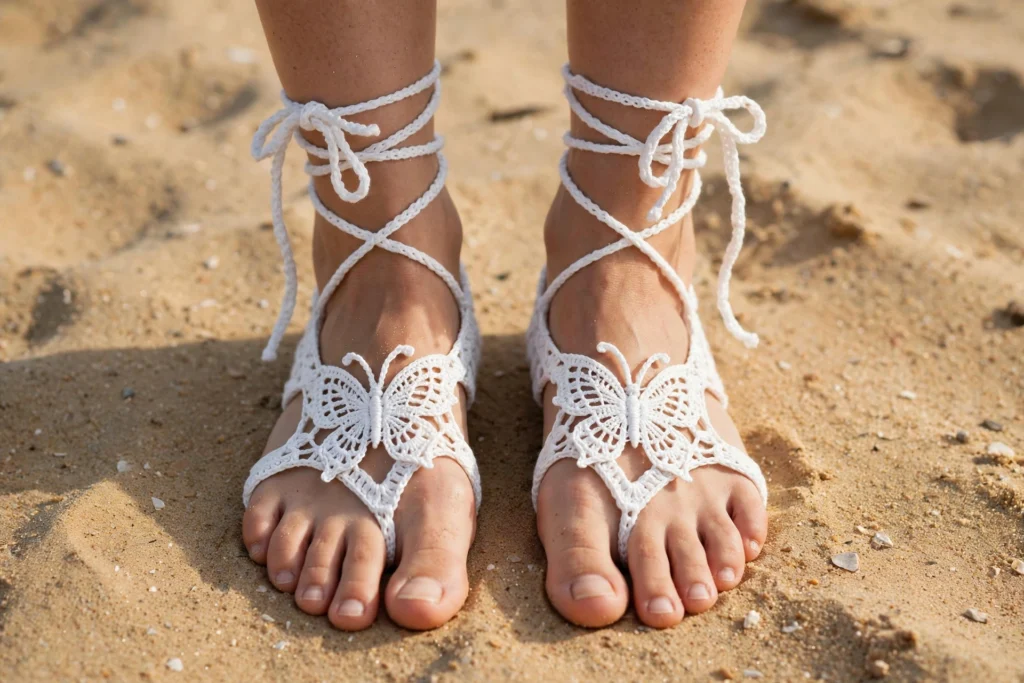
Barefoot sandals are jewellery that thinks it is footwear: no sole, no shoe, just a lacework medallion over the foot and ties at the ankle — the look of sandals with the ground still under your feet. They are the fastest wearable in this batch, the most photographed, and the make that wedding guests and beach brides have quietly been commissioning from crocheters for a decade.
Jump to section
The tutorial I follow is Zero Crafts’ barefoot butterfly sandals — step by step as titled, with a butterfly medallion as the centrepiece — and the architecture is the classic one: a motif that sits over the top of the foot, a loop for the second toe, and long ties that lace up the ankle. What follows is that build with my own notes on the fitting (a barefoot sandal is sized to a living foot, not a chart), yarn behaviour against skin and sand, and the variations that take the design from beach to wedding aisle.

What you need
A few grams of fine cotton — crochet thread or a light 4-ply — a small hook, and your own foot, present and patient. Fine yarn is the whole aesthetic: chunky barefoot sandals read as ankle warmers with ambitions, while thread-weight lace sits like jewellery. Cotton again for skin contact and washability; mercerised cotton adds the slight sheen that makes white pairs read bridal. Optional: tiny beads for the ankle ties, a second colour for the butterfly’s wings, and a ribbon scrap if ties are to be swapped for silk at a wedding. A pair uses so little yarn that it belongs with our crochet flower crown in the great ledger of makes that cost almost nothing and photograph like couture.
The medallion: a butterfly with a job
The centrepiece sits over the midfoot, and in this design it is a butterfly — wings spread across the foot’s top, body along its line. Worked in two or three rounds, the motif’s openwork is its comfort: a solid medallion would sweat against the skin, while lace breathes and moves with the foot’s flex. The butterfly’s scale is the first fitting decision — it should span the foot’s width without reaching its edges, because a motif that wraps the sides will fold and rub by the hundredth step. Work the pair of medallions first, both of them, before any ties: pairs made days apart are cousins, not twins, and feet are merciless comparators. Pin the finished medallion to the foot with the toe loop marked before committing to the lacing points.
The toe loop and the ties: where fitting lives
Three attachments turn lace into footwear: a loop around the second toe, and ties that rise from the medallion’s sides to lace the ankle. The toe loop is a short chain sized on the living toe — snug enough to stay, loose enough to forget — and its placement slightly towards the medallion’s lower edge keeps the motif lying flat rather than tipping. The ties in the tutorial are long chains reinforced to resist stretch, laced criss-cross up the ankle in the gladiator manner and finished with a bow or bead ends. Tie length is generosity: a metre per side is not too much, because lacing patterns are appetite, and a tie that ends mid-calf when you dreamed of knee-high is a small sorrow. Our crochet bunting taught the same lesson at garden scale — always make the stringing longer than the plan.
Fitting: the standing test
Fit barefoot sandals standing, on a hard floor, at the end of the day when feet are at their honest largest. Walk. The medallion must not migrate sideways, the toe loop must not saw, and the ties should hold the whole assembly with the ankle lacing doing the work — if the toe loop is load-bearing, the lacing is wrong. Adjust one variable at a time: medallion position first, then lacing tension, then toe loop length. A pair that passes twenty steps indoors will survive a beach day; a pair adjusted sitting down will be in your hand by the car park, teaching the old lesson that feet change shape under weight and all footwear fittings — even imaginary footwear — must respect it.
Variations: beach, boho, bridal
The beach version is the tutorial’s: coloured cotton, butterfly bold, ties long. The festival version adds beads at the tie ends and a second motif at the ankle. The bridal version — the one that built this design’s reputation — is white or ivory mercerised cotton, a smaller, finer motif, pearl beads worked into the medallion’s last round, and ties swapped or supplemented with silk ribbon; worn with a gown on sand, it solves the oldest beach-wedding problem, which is that heels and beaches are enemies and bare feet at a wedding need dressing. Bridesmaid sets in the wedding’s colours are an afternoon’s work for four pairs and are remembered longer than most favours. The full summer-occasion picture sits inside our garden party crochet projects.
Wearing them honestly
Barefoot sandals are for sand, lawns, decks, yoga studios and dance floors — surfaces that welcome bare feet. They offer zero protection, less grip, and no opinions about pavement; a city day in them is a pedicure’s revenge. Sunscreen the tops of your feet first — the lacework tans a butterfly onto the skin with total fidelity.
Care and keeping
Rinse sand out the same day; grit in cotton lace is sandpaper with patience. Hand-wash cool, dry flat with the medallion smoothed into shape, and store the pair tied loosely together so the laces do not become a knot puzzle. The ties are the wear point — inspect them each spring, and re-work a frayed tie in twenty minutes rather than retiring the pair. Kept kindly, a pair lasts years of summers, softening into the foot’s own map.
Frequently asked questions
How long does a pair take?
About an hour for the pair once the motif is familiar — two medallions, two toe loops, four ties. The first medallion is the slow one; its twin goes at double speed.
Do barefoot sandals stay on?
Yes, when the ankle lacing does the holding and the toe loop only positions. Fit them standing, lace firmly, and they will survive a beach day, a garden party and the dancing after.
What yarn is best against skin?
Fine cotton or mercerised crochet thread. It washes, breathes, holds its lace under tension, and does not go fuzzy against the foot. Save acrylic for the medallion’s trial version, not the pair you wear.