Lavender Nails: The Dreamiest Purple for Spring
Lavender nails are the dreamiest purple for spring: choosing between lavender and lilac, gloss versus matte, and the base that stops fading.

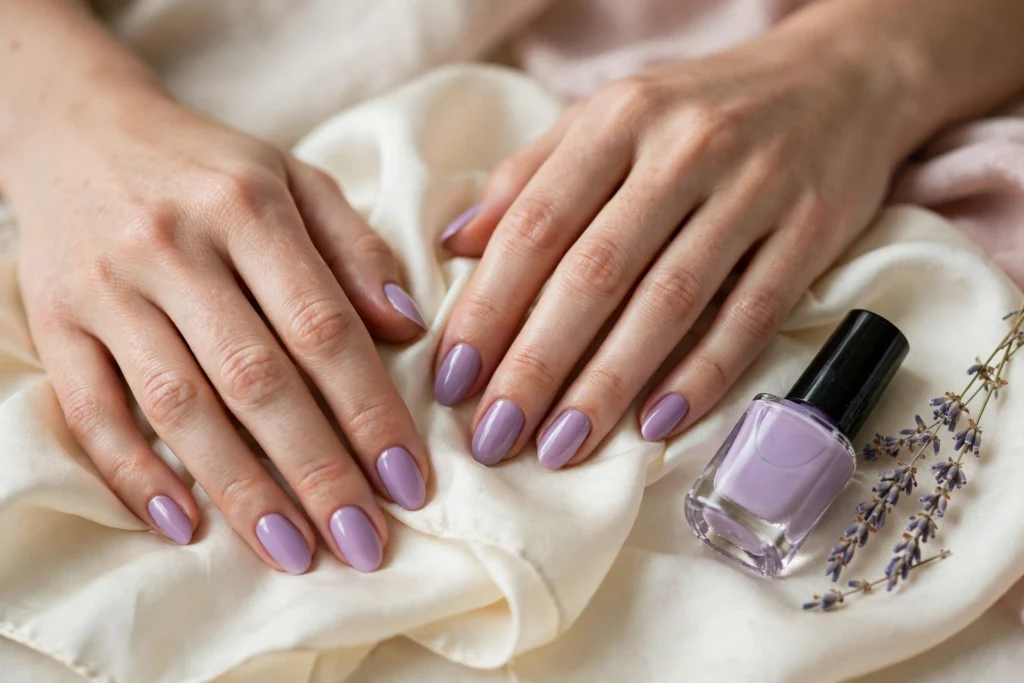
If butter yellow is spring arriving, lavender is spring settling in: the dreamy, greyed purple of the first lilac buds and the last of the hyacinths, soft enough for every day and strange enough to still feel like a choice. It is the purple I reach for when pink feels expected — a colour with a little weather in it.
Jump to section
The worked example I follow is nail beautiful’s step-by-step lavender tutorial, which builds a soft floral design over the shade — proof, if any were needed, that lavender is a base colour and a canvas at once. What follows is the shade logic underneath it: how to pick your lavender, how to wear it milky, solid or decorated, and how to keep a pastel purple from looking chalky.

What you need
A ridge-filling base coat, one lavender you have tested in daylight, a sheer milky white for the layered version, a fine liner brush and dotting tool if you are adding the floral accent, a glossy top coat and cuticle oil. Lavender is a forgiving pastel to apply — the purple pigment covers more kindly than yellow — but it is an unforgiving one to choose badly, so the bottle test below matters more than the tools.
Blue-leaning or pink-leaning: the only decision
Every lavender is a negotiation between blue and pink, and your skin has already voted. Blue-leaning lavenders — cooler, greyer, closer to periwinkle — flatter cool and fair skin and look almost silver in northern light. Pink-leaning lavenders, the lilacs with warmth in them, suit warm and olive skin and read softer everywhere. Deep skin wears both families and can go brighter than either: a saturated lavender on deep skin is one of spring’s great manicures. The test is the same as always: the bottle against the back of your hand, in daylight, judged for whether your skin looks clearer or greyer next to it. Greyer means the negotiation went the wrong way.
The milky lavender method
The softest way to wear the colour is borrowed directly from our milky white nails method: one coat of sheer milky white, two thin coats of a sheer lavender over it, and the milky white floated once more, thinnest of all, to cloud the result. The purple arrives diffused, like looking at lilac through muslin, and the manicure reads expensive out of all proportion to its effort. It is also the kindest version for uneven nails, because the milk layer blurs what a solid pastel would publish.
Solid lavender, worn properly
For the full-colour version, work in two to three thin coats and resist the urge to make the first coat count. Lavender dries a half-shade deeper than it looks wet, so judge the colour at the end, not midway. Keep the shape soft — oval and almond flatter the colour’s mood; a hard square in lavender can look like confectionery, which is charming in April and a lot in March. Gloss is non-negotiable: matte lavender reads as chalk within a day, while a glassy top coat keeps it in flower territory.
Simple art that suits it
Lavender asks for little. The tutorial’s route — small white and deeper-purple flowers dotted on two accent nails — is the classic because the colour is itself a flower, and echoing it is enough. Beyond that: a single gold-foil flake per hand, a white micro-dot at each cuticle, or the cheek-flush gradient of our blush nails tutorial translated into purple, blushing from the centre of the nail outwards. And for the maximalists, lavender is the natural lead in a spring set alongside the coloured tips of our spring floral nail art — the shade connects pinks to blues without belonging wholly to either.
Keeping it fresh
Purple pigments are well behaved: they rarely stain through a base coat, and lavender hides regrowth better than any pastel except butter. Its enemy is dullness, so the maintenance is a fresh gloss coat midweek and oil at night. Expect a week of good wear from regular polish. When the set comes off, check your bottles: lavender separates more visibly than most shades, a darker ring settling at the neck — roll the bottle gently between your palms before the next use rather than shaking bubbles into it, and store it out of the bathroom’s steam if you want the colour to stay true to the one you fell for.
Lavender at every length
Length changes lavender’s accent more than its colour. On short squoval nails it reads as a tint — the polish equivalent of a lilac scarf, present but polite, and the safest way into purple for anyone whose wardrobe runs navy and grey. On long almond or coffin shapes the same bottle turns romantic and then, in the matte finish, faintly gothic: the colour deepens as the canvas grows. Neither is the correct one; they are the same purple at two volumes, and March is the month to find out which volume is yours. If you change shapes with the seasons, lavender is the shade to carry across the change — it flatters the last short weeks and the first long set with equal ease.
Frequently asked questions
Is lavender the same as lilac on nails?
Nearly — lilac is the pinker, warmer end of the same family and lavender the bluer, greyer end. On the nail they blend into each other; choose by undertone against your skin rather than by the name on the bottle.
Can lavender nails work for an office?
Yes, in the milky or muted versions. A greyed lavender at short length reads as a polished neutral with better conversation; save the saturated and glitter versions for weekends.
What colours pair with lavender in a set?
Butter yellow, sage and blush are its spring neighbours, white sharpens it, and a single silver or gold accent flatters it. Avoid pairing it with orange unless you are deliberately doing the full garden.