Pastel French Tips for Spring
Pastel French tips for spring: five soft tip colours on a sheer base, the smile-line trick for short nails, and one-colour versus skittle sets.

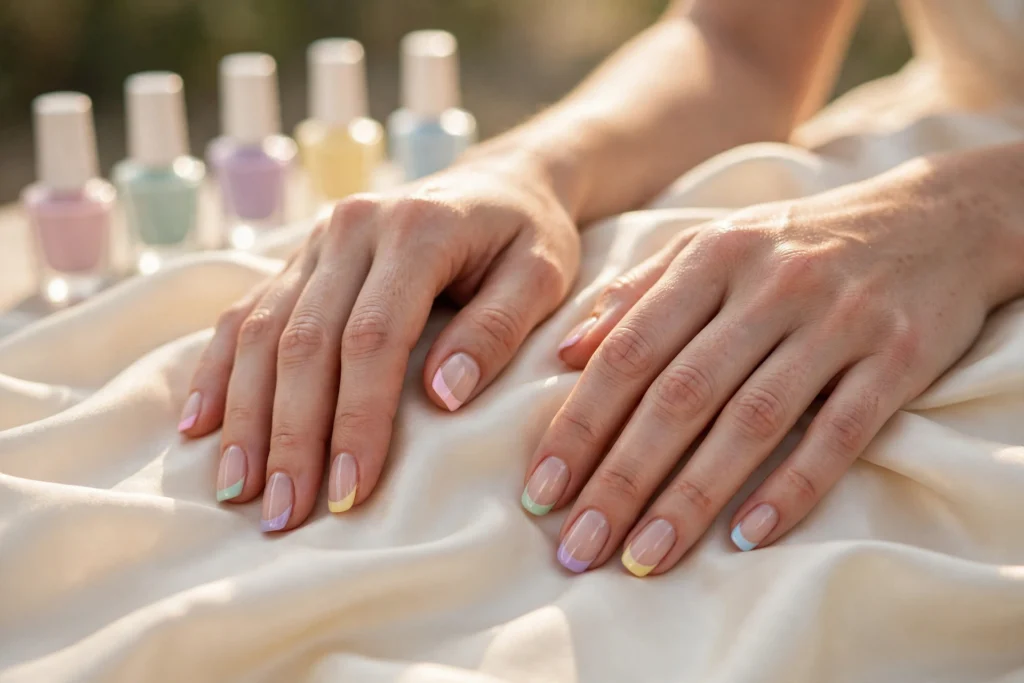
If the classic French manicure is a white shirt, pastel French tips are the same shirt in five spring colours. A sheer, healthy base, and instead of the white smile line: mint on one nail, lilac on the next, butter yellow, baby blue, blush pink. It is tidy enough for work, sweet enough for Easter lunch, and it grows out so gracefully that nobody can tell the manicure is two weeks old.
Jump to section
The tutorial below uses the A-method I have relied on for years, and Shonagh Scott’s spring palette is nearly identical to the one in my own polish drawer. What follows is her method with my notes on short nails, sheer bases, and deciding between one colour and the full skittle set.

Why pastel tips are the spring refresh
A coloured tip changes the whole temperature of a French manicure without touching its neatness. The sheer base keeps your nails looking like your nails, the pastel does the seasonal talking, and because only the last few millimetres carry colour, even a shade you would never wear full-coverage feels wearable. It is also the kindest design for regrowth: the smile line is nowhere near the cuticle, so week two still looks deliberate.
how to do French tips at home is the classic white version step by step — guides, tape, and the freehand method — and everything in it applies here before you swap white for colour.
What you need
- A sheer base polish — milky pink or a soft nude that suits your skin
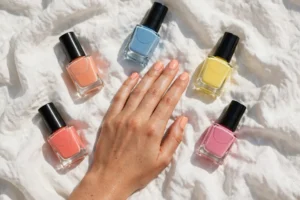
- Pastel polishes: mint, lilac, butter yellow, baby blue, blush pink
- A long, thin liner brush for the smile line (or tip guides if you prefer)
- Base coat and a glossy top coat
- A small brush and remover for clean-up
Step one: the sheer base
One or two coats of your sheer base over base coat, and let it level. The base is doing quiet but essential work: it evens out the nail’s colour so the pastel tips read true, and it gives that healthy, just-manicured glow. Too opaque and the look turns into colour-blocking; too bare and any staining shows through. A milky pink is the forgiving middle. If your natural nails are uneven in length, the sheer base is also where a gentle shape tidy makes the biggest difference — tips only look like a set when the nails underneath agree with each other.
The A-method smile line
For each tip, draw a short vertical dash where you want the smile line to start at one side, mirror it at the other side, then join the two with a gentle curve across the middle — the strokes form a shallow A before you fill the tip below the line. Work in the pastel with the liner brush, keep the line thinner than you think (you can widen it on the second pass), and fill with the polish brush once the outline is set. One coat of pastel is usually sheer at the edge; a second thin coat makes the tip opaque and crisp. Clean the corners with the remover brush while the polish is still wet for that salon edge.
One colour, skittle set, or somewhere between?
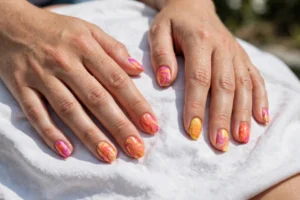
Three honest options. All ten in one pastel — butter yellow is my spring favourite — reads chic and deliberate. The full skittle, a different pastel per nail, is the playful Easter version and the one that gets photographed. And the halfway house I wear most: one colour on nine nails with a single contrast tip on each ring finger. There is no wrong answer, but decide before you start; changing your mind mid-set is how odd nails happen. If you love the softness of a faded edge instead of a line, baby boomer nails fade white into pink with no smile line at all — the pastel version of that fade is gorgeous too.
Short nails: the adjustments that matter
Short nails take this design beautifully with two tweaks. Keep the tip shallow — a deep smile line on a short nail leaves no room for the base to show and the proportions tip over. And consider a micro-French: a line so fine it is almost a gesture, painted right at the free edge. Pastels flatter the micro version because the colour is gentle; five soft hairlines read as spring jewellery for your hands. Square and squoval shapes take the straightest lines; on almond nails, follow the curve of the tip rather than fighting it.
Keeping pastel tips crisp all week
Tips chip at the free edge first because that is where nails flex and knock. A second layer of top coat on day three, painted just over the tips and sealed around the edge, buys you most of a second week. Pastels also show every scuff, so gloves for gardening — spring’s other great temptation — and you are set. For a softer, shinier base altogether, glazed donut nails at home is the chrome-glazed cousin of this look; a pastel tip over a glazed base is a very pretty hybrid.
Frequently asked questions
Can I paint pastel French tips with regular polish?
Absolutely — this tutorial approach works in regular polish, and the sheer base hides a multitude of sins. Let the base dry fully before drawing tips so the liner brush does not drag it, and finish with a good glossy top coat to smooth the step between tip and base.
How do I stop my smile lines wobbling?
Rest the heel of your painting hand on the table and move the finger, not the brush, on the curve — it is the single biggest steadiness upgrade. Work in two passes: a thin first line you forgive, then a correcting second pass. Perfection at coat one is a myth even professionals don’t believe.
Which pastel suits a warm skin tone best?
Butter yellow and peachy pinks are the warm-tone winners; on cooler skin, lilac and baby blue sing. Mint flatters nearly everyone because it sits between the two families. When in doubt, hold the bottle against the back of your hand in daylight — the right pastel makes your skin look clearer, not greyer.