14 Crochet Beach Projects: Before You Go, and On the Sand
Fourteen crochet beach projects in two honest categories: the kit to make before you go, and the sitting makes for the blanket itself included.

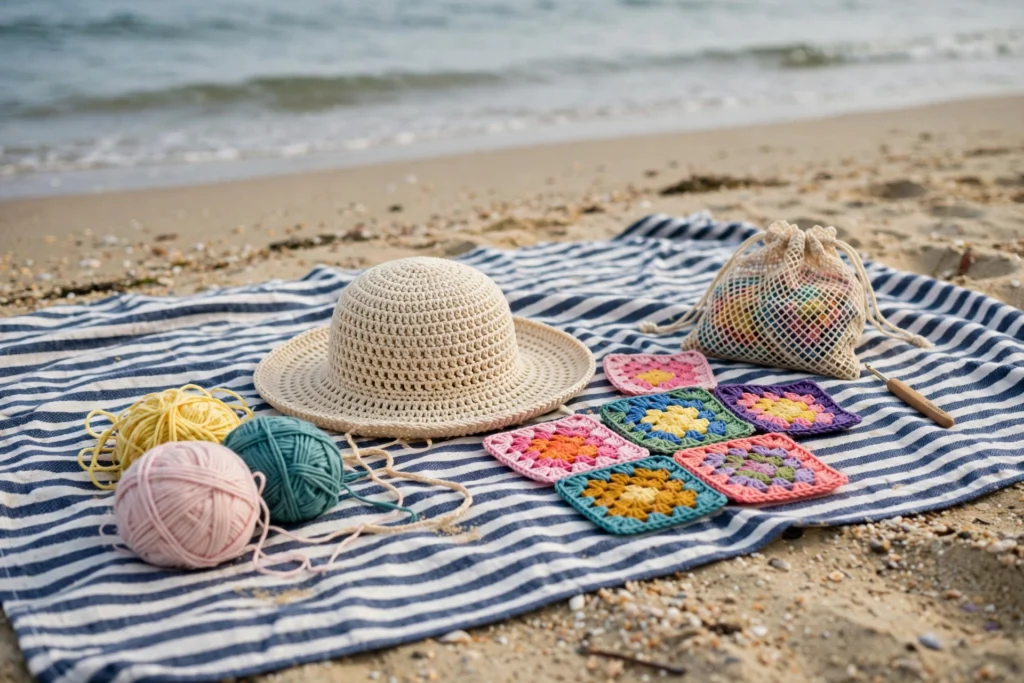
The beach is crochet’s natural habitat: a craft that needs no table, no electricity and no silence, practised within sight of the sea that inspired half its stitches. These fourteen beach projects split into the two honest categories — things to make FOR the beach before you go, and things to make AT the beach while the day unspools — and every one of them is beginner-friendly, quick, and cotton-wise.
Jump to section
The reference roundup is omazingpaige’s beach crochet collection — fifty-plus easy beach ideas with free patterns, per its title — and I have cut it hard, to the fourteen that survive contact with real sand, real sun and real holiday luggage allowances. Abandoned along the way: anything woollen, anything precious, anything that cannot be rinsed under a tap and forgiven. What remains is the working set — the makes our readers actually finish, use and remake in new colours next year.

Make before you go: the kit
1. The sun hat, perfected. Our crochet sun hat is the beach kit’s foundation — make this year’s in the new colour while last year’s takes the spare peg. 2. A towel with a pocket. A crocheted pocket panel sewn to a plain towel’s corner: phone, keys and card ride inside, sand stays outside-ish. 3. Sunglasses case. A padded single-crochet sleeve, ten centimetres of dense stitch that has saved more lenses than any insurance. 4. The book sleeve. Paperbacks and e-readers both die of sand; a cotton sleeve with a button flap is their lifeboat, sized in one sitting to the book in hand. 5. A dry-bag liner. An open-mesh drawstring bag that organises the inside of our easy crochet tote bag — wet things on one side, dry things defended.
Make before you go: the dressing
6. Sarong edging. A plain cotton sarong plus a crocheted shell edge equals a boutique wrap; the edging is one long, meditative row repeated. 7. Hair wraps and bands. Salt hair is glorious and unmanageable; a wide cotton band tames it into a look. 8. The picnic blanket’s summer weight. Our crochet picnic blanket in cotton rather than acrylic — heavier to carry, happier on sand, and it doubles as the beach mat that never blows away. 9. Bunting for the windbreak. Our crochet bunting strung along the windbreak marks your territory in the friendliest possible way and lets the children find the family camp from the water’s edge.
Make at the beach: the sitting makes
10. Friendship bracelets, production line. Chain, knot, bead, repeat — the make that absorbs children’s and adults’ hands alike while the conversation does the real work. 11. Shell-collector’s pouch. A tiny mesh drawstring bag started after breakfast and carrying treasure by lunch; its mesh lets the sand fall out on the walk home, which is the entire point. 12. Motif squares for a future blanket. The beach is the ancestral home of the one-motif-at-a-time project: a bag of cotton, one square per sitting, and September inherits a blanket’s worth of summer afternoons. Our crochet summer top began exactly this way for many makers — small pieces, joined at home.
Make at the beach: the social makes
13. The group garland. Everyone on the blanket makes one motif — skill no object, wonkiness cherished — and the chain they are joined onto becomes the holiday’s garland, photographed on the last night and divided or kept by vote. 14. The replacement hat. Someone always loses a hat to the sea. The beach-seasoned crocheter carries the cotton and the pattern in memory and produces the replacement on the spot, to applause — the closest our craft gets to a magic trick, and the reason to keep our crochet market bag stocked with a ball and a hook all summer.
The beach crochet kit itself
Pack for the craft the way the list implies: two balls of cotton in colours that forgive sand, one hook a size up and one a size down from your usual (sand changes everyone’s tension), blunt scissors that airport security tolerates, and projects at the two scales — a garment piece for the long sittings and a motif project for the broken ones. Work in the shade of the windbreak rather than full sun, partly for your eyes and partly because cotton in bright light lies about its colour: the shell-pink that charmed at noon is beige by the cottage lamp. Finish each day by shaking every project like a rug — sand in a yarn bag compounds like interest.
Repairs, rescues and the borrowed-hook economy
Every beach season generates the same small emergencies, and the prepared crocheter is the one other holidaymakers learn to find. A sun hat’s brim that has gone wavy in the heat recovers with a cool rinse and a night pressed flat under the heaviest book in the cottage. A tote strap that tears at the join is a ten-minute sew with the yarn tail you were wise enough to leave long — leave them long on every beach make, always, because the beach is where joins are tested. A child’s lost comforter motif can be replaced from the motif-square bag before tears dry; this has been done, at speed, to applause, and it is the strongest argument for carrying the motif project at all. And the borrowed-hook economy runs on one rule: lend the spare hook, never the good one, and accept payment in ice cream — the beach’s hardest currency and the crocheter’s traditional fee.
There is a serious point under the folklore: beach makes should be built repair-first. Choose stitches that can be re-entered mid-row, keep a metre of each project’s yarn wound in the kit bag against the day it is needed, and photograph new makes before their first outing so a repair can match the original. A beach project is not finished when it is fastened off; it is finished when its owner could mend it on a blanket, with sand in the yarn and an audience — which is, in the end, the standard this whole list was quietly built to, stitch by sandy stitch, all season long. Keep the metre of spare yarn even after the holiday ends: beach makes return every summer, and so do their emergencies. Pack it with the hats and the pouches, where next June will find it waiting.
Frequently asked questions
What yarn survives the beach best?
Cotton, plainly. It rinses clean, dries fast, ignores salt, and its weight keeps projects from sailing off the blanket. Acrylic survives too but holds sand in its fuzz and melts its reputation near disposable barbecues.
What is the best project for a total beginner at the beach?
The shell-collector’s pouch or the friendship bracelets — both are chains and simple stitches with a finished object inside the day. A beginner who ends a beach day wearing their own work is a crocheter for life.
How do I keep sand out of the work?
Mostly, you don’t — you manage it. Work from a bag kept on the blanket rather than the sand, choose cotton that shakes clean, and give every finished piece a vigorous shake and a rinse at home. A little sand in the joining is not damage; it is provenance.