18 Late-Winter Nail Ideas for the In-Between Season
Eighteen late-winter nail ideas by mood — the last of the cosy, the clean resets, the first colour and the small art that bridges the seasons.

Late winter is the strangest season in my polish diary. The party shades feel finished, the pastels feel premature, and the weather cannot decide which team it is on. This is the in-between edit: eighteen nail ideas organised by mood — the last of the cosy, the clean resets, the first colour, and the small art that bridges them — for the weeks when winter is ending in theory only.
Jump to section
The art anchor for the collection is Kirsty Meakin’s winter wonderland nail art on short nails, proof that the season’s motifs still earn their place when they are done this well. Work through the eighteen by family and pick for the fortnight you are actually having, not the spring the forecast keeps promising. This batch’s own tutorials — soap nails, bow nails, swirl nails and tweed nails — all live inside these families in full step-by-step form.

The last of the cosy (1–5)
1. Tweed in cream and stone — this batch’s woven tutorial, the tailored end of knit season. 2. Brown swirls — caramel and espresso waves; also this batch’s, and the warmest pattern on this page. 3. The final snowflake set — one last outing for the flakes in our snowflake nail art tutorial, retired without ceremony when March arrives. 4. Oxblood, short and glossy — the dark shortie’s heavier sister, worn with the good coat. 5. Cocoa French — a brown smile line on a nude base, for anyone whose classic French went into hibernation in December and is not ready to be white again.
The clean reset (6–10)
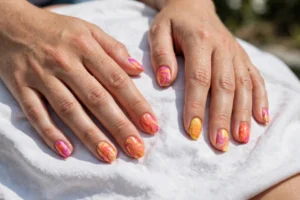
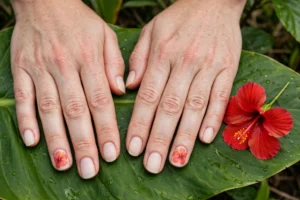
6. Soap nails — the sheer sudsy manicure from this batch, the reset with a gloss on it. 7. The micro French — a one-millimetre line of order; our micro French tips tutorial is the full method. 8. The tinted strengthener week — treatment worn as polish while nails recover from gel season. 9. Ballet pink, opaque and immaculate — January’s reset graduates to a colour with a spine. 10. The oil-and-buff bare nail — no polish at all, just shaped, buffed and oiled nails, the palate cleanser this whole edit is built around; the January version of this mood lives in our fresh start nail ideas, and the late-winter one simply asks for less sparkle around it.
The first colour (11–14)
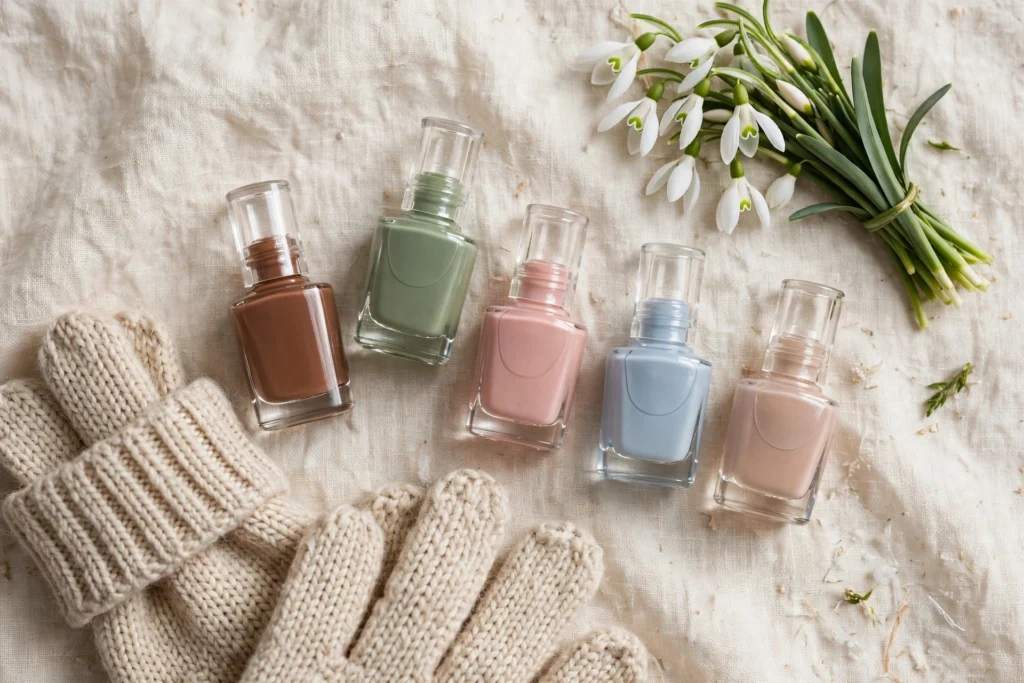
11. Sage, worn plain — the first green, muted enough for a grey sky. 12. Blush nails — the cheek-flush technique from our blush nails tutorial, which is practically the official colour of the season turning. 13. Icy blue, no art — winter’s colour saying goodbye in a plain glossy coat. 14. A pastel skittle, muted — five dusty spring shades, one per nail, with the saturation turned down until the set agrees with February light; the full-brightness version arrives with our pastel French tips for spring when spring itself does.
Small art, bridging (15–18)
15. Bow nails — this batch’s coquette set, the romantic bridge between Valentine’s and spring florals. 16. A single star per hand — the celestial mood of our celestial nails tutorial reduced to one gold star on a nude base. 17. The dotted half-moon — a bare crescent at the cuticle under any of the reset shades, two minutes of art per hand. 18. Pearl dot at the cuticle — one tiny pearl or a dab of pearl polish where the nail begins; the smallest possible jewel, and the one that photographs like a decision.
Wearing the in-between well
The practical rules for the season are unglamorous and decisive. Keep lengths a fraction shorter — late-winter nails are dry, and dry nails chip at the corners first. Oil twice a day instead of once; indoor heating is at its most punishing in these weeks, and the sheer and reset families above show every dry cuticle they meet. And choose your family by the light when you wake: cosy on the grey days, clean on the bright ones, first colour the moment a crocus appears anywhere you walk. That is not indecision — that is dressing for the season you have, which is the entire editorial position of this page.
The two-week rotation
If choosing feels like work, here is the edit worn as a fortnight. Week one, the grey week: tweed on Monday’s fresh set, worn until it tires, then the dark oxblood shortie for the weekend — two cosy manicures that between them cover every coat you own. Midweek two, the reset: strip everything back to the tinted strengthener for two days, honestly bare and oiled, then soap nails as the working set. The final weekend is for the first colour — sage if the light has turned, blush if it has not — with a single star or pearl dot added on Saturday morning when you see which mood the weather has chosen. Four manicures, no decisions made after breakfast, and every bottle involved comes from a shelf you already own.
The shelf edit that makes it possible
Late winter is also when I audit the polish shelf, because the in-between edit fails when it becomes an excuse to buy six new bottles. Test every sheer on a nail wheel and retire the streaky ones without sentiment — soap nails are only as good as their worst bottle. Check the browns for temperature consistency, decant nothing, label the strengthener so it stops being used as a base coat by mistake, and put the December glitters in a box at the back, out of casual reach but not out of the house. The edit above needs perhaps ten bottles in total. Everything else is December’s business or April’s, and the shelf, like the season, is better for the honesty.
A note on hands, not just nails
The in-between season is the hardest of the year on skin, and a manicure edit that ignores hands is a hat without a coat. Keep the rich cream by the bed and the light one by the sink, because the one you will use is the one within reach. Push cuticles back after showers, when they are soft, instead of trimming them at the desk. Wear the washing-up gloves without being asked twice — hot water and detergent undo February cuticles faster than any polish can flatter them. And file little and often rather than reshaping heroically once a month: dry nails forgive maintenance and resent renovation. The prettiest manicure in this edit sits on cared-for hands; the care is not a footnote to the ideas, it is the first five minutes of every single one of them.
Frequently asked questions
What colours suit late winter best?
The bridge shades: warm browns, sage, blush, icy blue and every sheer reset neutral. They acknowledge the cold without repeating December, and they step into spring without pretending it has arrived.
How do I stop late-winter nails chipping?
Shorter lengths, capped edges, oil twice daily and gloves for washing up. Dry February nails fail at the corners, so a softened square or oval shape survives the season best.
When should I switch to spring nails properly?
When you can leave the house in one layer less — the pastels are waiting, and this edit is designed to hand over to them without a single wasted manicure in between.