Sage Green Nails: The Quiet Green of Early Spring
Sage green nails are the quiet colour of early spring: how the grey in it flatters every skin tone, which finish to choose, and how to wear it.

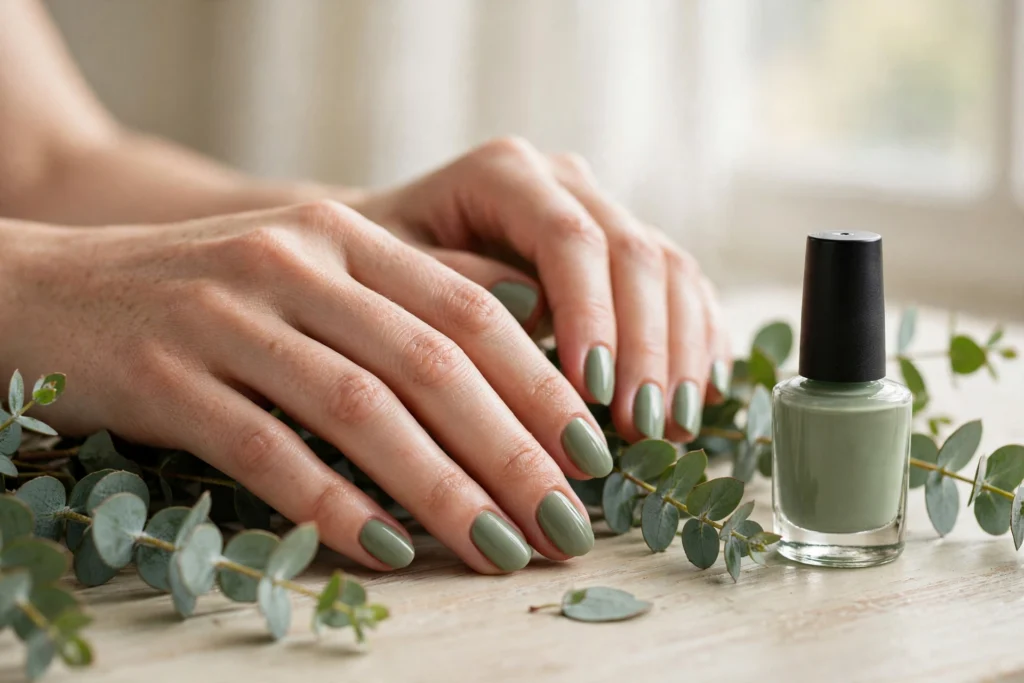
Not everyone wants spring to arrive in pastels. For the hands that spent winter in oxblood and espresso and are not ready for the sweetshop, there is sage: a greyed, dusty green that behaves like a neutral while quietly being a colour. It is the first green of the year — leaf buds, herb pots, the garden thinking about it — and it asks nothing of your wardrobe except that it calm down.
Jump to section
The set I take my cues from is Unique’s Nails’ sage green Gel-X session, a full sage set built calmly at home from prep to finish — watch how the colour carries a whole set on its own before you decide it needs help. What follows is my shade logic: finding the right sage, applying a streak-prone pastel-green without the streaks, and the three ways I wear it through March.

What you need
A ridge-filling base coat, your sage, a sheer nude for the French variation, a glossy top coat and oil. Sage formulas vary from chalky to buttery, so the base coat earns its place. Everything else about this manicure is restraint: it is the tutorial in this batch with the shortest kit list and the longest opinions about shade.
Finding your sage (and avoiding the khaki trap)
Sage is green that has been greyed — and the greying is a cliff edge. A touch too much yellow and the bottle slides into khaki, then olive, then a colour that makes nails look like they have been gardening without gloves. A touch too much blue and you have left sage for dusty teal, pretty but a different promise. The true sage sits exactly between: soft, dusty, unmistakably green and unmistakably quiet. Test on the back of the hand in daylight, as always. Fair skin takes the palest sages beautifully; medium skin owns the middle of the family; deep skin should go a half-step clearer and greener, because the dustiest shades can ash against deep tones. If the colour makes your hands look red, it is too warm — move one bottle cooler.
Application: pastels streak, sage sulks
Green pastels share yellow’s application sins and add one of their own: they dry unevenly, so a coat that looked level wet can cure patchy. The defence is the pastel liturgy — ridge-filling base, three thin coats, floated brush, two honest minutes between coats — plus a rule of sage’s own: never judge the colour until the top coat is on. Sage is the shade most transformed by gloss; under a glassy finish the dustiness becomes depth, while a matte top coat leaves it looking like paint sample. Our late-winter nail ideas edit is where sage first appeared in this house, worn plain as the first green — this tutorial is that single idea given its own room.
Three ways to wear it
Plain, first: ten nails of glossy sage is a complete sentence, and the version that survives every March in my diary. Second, the sage French: a sheer nude base with the smile line in sage instead of white — the gentle end of our pastel French tips for spring, and the one that draws compliments from people who claim not to notice nails. Third, sage as the anchor of a textured set: it is the natural partner of woven, knitted finishes, so a sage base under the dash-work of our tweed nails gives the last cold weeks a manicure that matches the coat exactly. One shade, three registers, no new bottles beyond the sage itself.
Sage with everything else
Sage’s great social gift is that it mediates. Put it between butter yellow and lavender and the three pastels stop competing — sage is the shade that makes a spring set look curated rather than collected. It flatters gold jewellery more than silver, linen more than satin, and every shade of denim ever washed. Against skin it reads freshest in daylight and most sophisticated at night, which is a rare double act for a pastel. If you buy one spring colour this year and your taste runs quiet, this is the bottle; the loud shades will still be there in May, when the light can carry them.
Keeping it calm
Sage shows chips honestly — there is no sparkle to hide behind — so cap the edges at application and again at the midweek gloss refresh. Green pigments can stain an unprotected nail, so the base coat is structural, not decorative; with it, removal is clean and quick. Expect a week of wear. And when the set comes off, notice what it taught you: muted colours forgive short nails, dry cuticles and real life in a way the brights never will, which is why sage, of all the shades in this batch, is the one most likely to still be on your hands when the blossom actually opens.
Sage beyond the hands
The same qualities make sage the pedicure colour of early spring: soft against sandals, invisible against stone and linen, and forgiving of the feet winter left behind. Match hands and toes in March without a second thought — sage is one of the few shades where the match reads calm rather than coordinated — or let the toes go a tone deeper, into the moss family, while the hands stay light. Either way it is the colour that carries the whole spring wardrobe’s green thread without ever raising its voice.
Frequently asked questions
Is sage green a neutral?
Functionally, yes. It pairs with warm and cool palettes, reads as quiet as beige at a glance, and only reveals itself as a colour on the second look — which is precisely its charm.
Why does my sage look like khaki?
The bottle carries too much yellow for your skin, or your nails are stained warm underneath. Move one shade cooler and greener, and wear a milky undercoat if staining is the culprit.
Does sage suit short nails?
It may suit them best of all. Muted shades do not visually shorten the nail the way dark ones do, and a short, glossy sage set is the tidiest manicure in this entire batch.